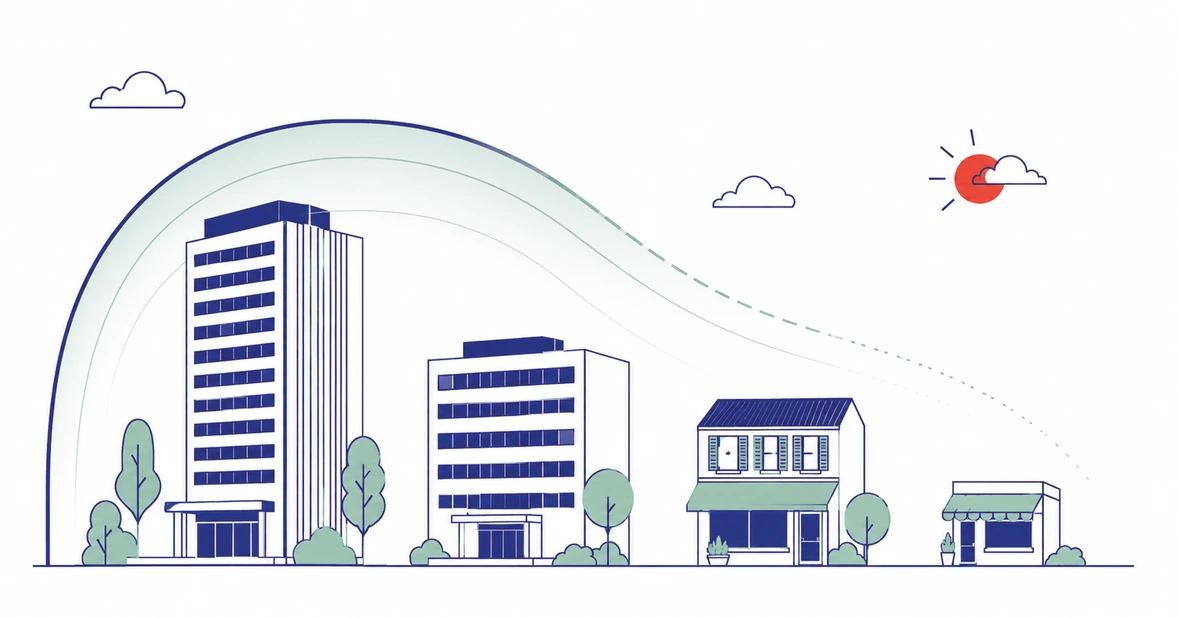
What Is Cyber Inequity?
It is the World Economic Forum's term for the widening gap in cyber capability between larger and smaller organisations. Keerthi uses it to name what he sees in the market: how much protection a company gets still depends on how much it can pay.
"For smaller businesses that lack the budget, they have nothing," he told the publication. "And ironically, it's the smallest companies that have the least cybersecurity that are the most affected by cyberattacks."
A large firm can usually absorb an incident and recover. A smaller one may not get the chance.
We have written about the same split before, in Bank InfoSecurity: The Great Cyber Divide.
"You know there's a problem, and you know that you're at risk. But you can't do anything about it. So, StrongKeep sits in that space."
Gaurav Keerthi, CEO and co-founder of StrongKeep, speaking to CRN AsiaWhy Doesn't a Cheaper Enterprise Security Tool Work?
Because the cost that matters is the person running it. The usual route to a cheaper product is to trim an enterprise tool and wrap a service around it. "That doesn't really work because it still becomes very expensive," he said. "You're paying for consultant's time and it doesn't really fit the needs of a small law firm or accounting firm."
His analogy is IKEA. In his telling, hire a carpenter and you get a bespoke table measured to your room; walk into a flat-pack store and you get one you screw together yourself for a fraction of the price. The second is not a discounted version of the first. "I have to fundamentally re-engineer what a table means," Keerthi said.
Read the Full Interview on CRN Asia
Aaron Raj's feature covers more than we have here: the four ways Keerthi says smaller businesses actually get breached, why the IT vendors who look after them started reselling the platform, and how AI lowered the cost of building it.
Read StrongKeep brings enterprise-grade cybersecurity within reach of small businesses on CRN Asia, published 20 July 2026.
Frequently Asked Questions
Who is hit hardest by cyber inequity?
The smallest businesses. In the CRN Asia interview, Gaurav Keerthi describes protection as priced for companies that already employ security teams, so firms without that budget end up with the least of it while facing the same attackers as everyone else. A large firm can usually absorb an incident and recover. A smaller one often cannot.
What does StrongKeep bundle into a plan?
Four things, mapped to the four ways a smaller business usually gets caught: enterprise-grade endpoint detection and response on every device, a network-layer DNS filter instead of a hardware box, a team password manager that also holds multi-factor codes, and a scan of the customer's servers during onboarding, run the way an attacker would look at them.
How much does StrongKeep cost?
The Protection plan starts at US$39 (S$49) a month, billed annually, and covers up to five devices, with a per-device add-on above that. Current plans and prices are on the StrongKeep pricing page.
Is StrongKeep a managed security service?
No. StrongKeep is a self-serve platform. The dashboard surfaces the alerts and the configuration, and the customer operates it. Separately, some IT vendors and managed service providers build their own services around the platform for their own clients, which is the channel the CRN Asia interview describes.
What Does StrongKeep Do?
StrongKeep is a self-serve cybersecurity platform for small and medium businesses. It bundles endpoint protection, phishing and malicious-link filtering, credential management, staff awareness training and phishing simulations, all run by the business itself from one dashboard. Compliance tooling is available on higher plans. StrongKeep holds the CSA Cyber Essentials Mark. Built for teams without an IT department. Plans are on the pricing page.